
The most useful answer begins with the condition at the property. Materials, age, base, drainage and previous work can change what is practical, so this article is a starting point—not a diagnosis from a photograph.
Identify where movement begins
A loose unit beside coping has a different context from several rocking pavers near a drain or landscape edge. The first step is to map the movement and check whether joints, borders or nearby materials have opened. Wet and dry observations can reveal whether water is involved.
Lift enough area for a stable tie-in
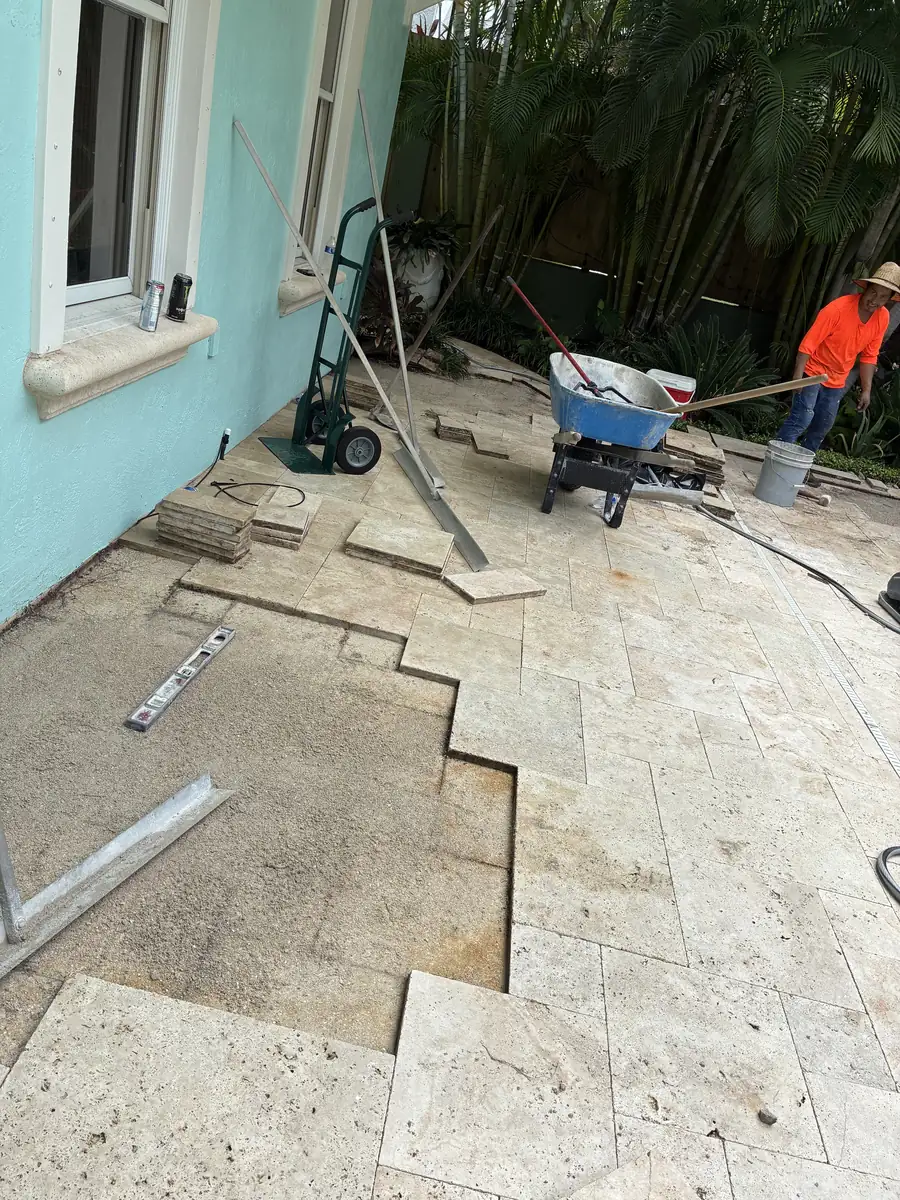
The affected pavers or stone are removed carefully and reusable material is staged. Loose bedding, roots or washed-out support can then be addressed. The repair often needs to extend beyond a single rocking piece so new support can meet a stable part of the deck.
Protect pool-edge relationships
Finished grade, coping, drains, screen footings and thresholds must work together. The pavers are reset to create practical walking transitions and shed water without forcing it toward the pool or house. Matching older material is discussed before damaged units are replaced.
What to notice before requesting an estimate
Take one wide photograph that shows the affected area in relation to the house, driveway, pool or landscape. Add close views of movement, joints, cracks or staining, plus any nearby drain, downspout or edge. Note whether the condition changes after rain and whether it has spread over time.
A clear scope should explain what is visible, what may be contributing, which area will be opened or rebuilt and what result is realistic. If an underlying condition cannot be confirmed until pavers are lifted, that uncertainty should be stated rather than hidden.