
The most useful answer begins with the condition at the property. Materials, age, base, drainage and previous work can change what is practical, so this article is a starting point—not a diagnosis from a photograph.
Old brick is valuable because it is not uniform
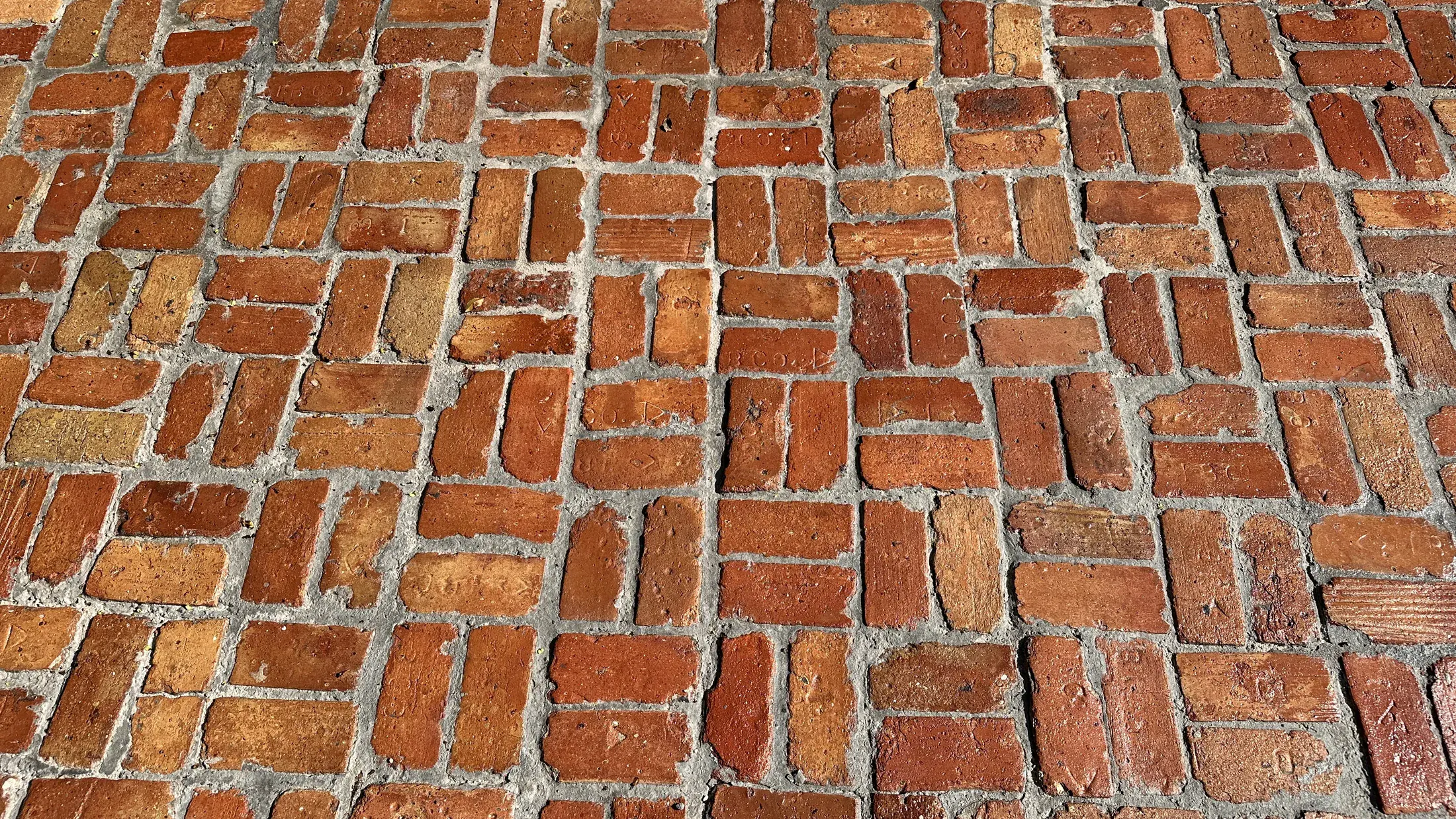
Authentic reclaimed Chicago brick carries varied color, worn edges and historic markings. Reusing serviceable units preserves that established appearance and usually blends better than replacing a large area with new material.
Sort by condition and intended use
Brick should be checked for severe spalling, cracking and loss of usable bearing surface. Sound units can return to the field, while damaged pieces may be reserved for non-structural cuts or removed. Compatible reclaimed replacements are blended where necessary.
Rebuild support before resetting
The original brick may be worth saving even when the base, mortar or edge has failed. Courses are documented, lifted and reset after the supporting condition is corrected. Cleaning and sealing are separate decisions based on moisture, prior treatments and the desired finish.
What to notice before requesting an estimate
Take one wide photograph that shows the affected area in relation to the house, driveway, pool or landscape. Add close views of movement, joints, cracks or staining, plus any nearby drain, downspout or edge. Note whether the condition changes after rain and whether it has spread over time.
A clear scope should explain what is visible, what may be contributing, which area will be opened or rebuilt and what result is realistic. If an underlying condition cannot be confirmed until pavers are lifted, that uncertainty should be stated rather than hidden.