
The most useful answer begins with the condition at the property. Materials, age, base, drainage and previous work can change what is practical, so this article is a starting point—not a diagnosis from a photograph.
Map the affected area before lifting
The repair begins with wide and close photographs, pattern notes and elevation checks. Nearby edges, drains, downspouts, roots, garage thresholds and roadway transitions help define the context. The work limits usually extend far enough into stable paving to create a smooth tie-in rather than stopping at the deepest visible point.
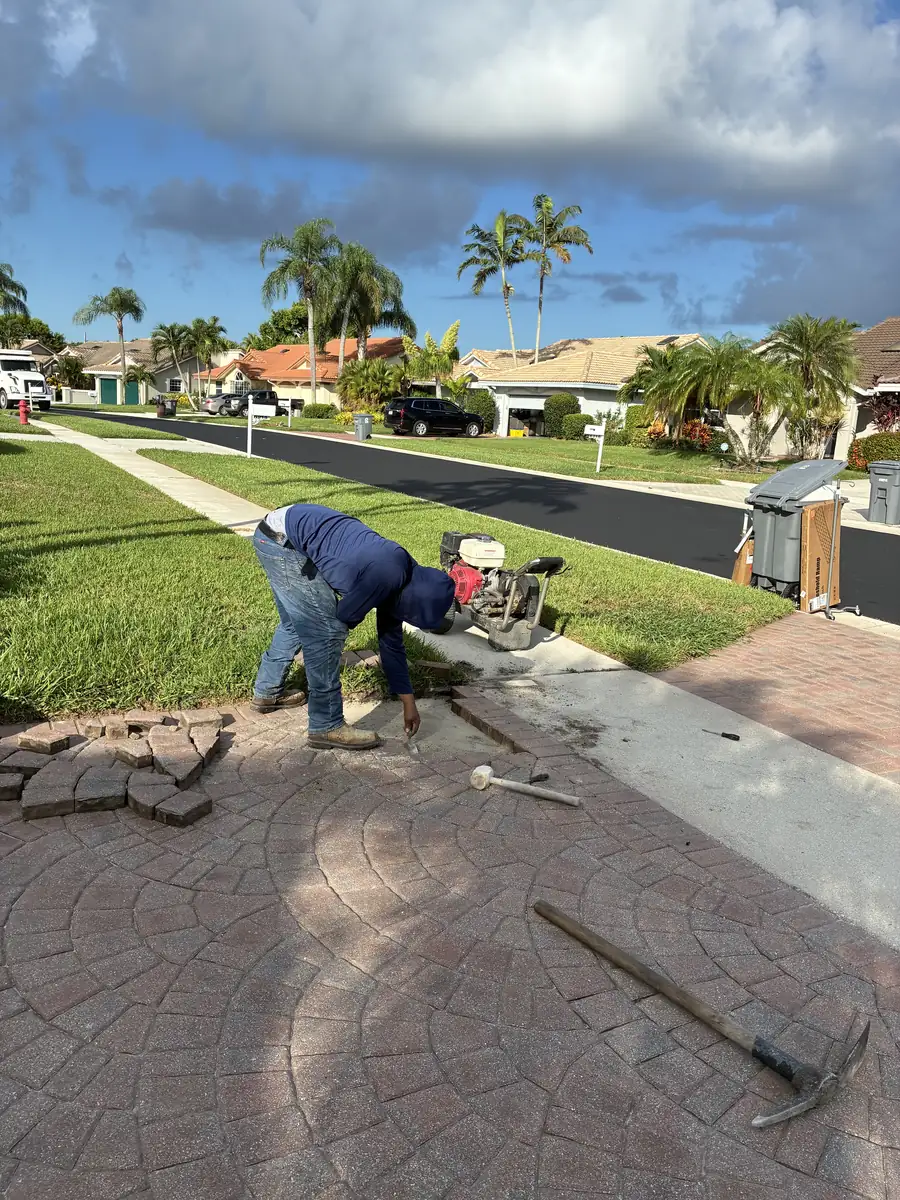
Lift and organize reusable pavers
Existing pavers are removed carefully and staged so serviceable units can return to the driveway. This preserves weathered color and the established pattern. Broken pieces are separated, and any stored matching pavers can be compared before replacements are ordered. The open area then makes the bedding and base condition visible.
Remove failed support and address the cause
Loose, eroded or contaminated material is removed to a stable condition. The scope may also involve an edge, root interference, drain area or water path. The appropriate correction depends on what is actually found; simply placing extra bedding sand above unstable base material may hide the depression temporarily without restoring dependable support.
Rebuild elevation and reset the field
Base material is placed and compacted for the repair conditions, followed by the bedding layer and carefully established grade. Pavers are returned in the original bond, with lines and transitions checked against the surrounding driveway. Replacement units are blended only where needed, and joints are completed with material suitable for the existing assembly.
Check the finished transition
The repaired area should meet garages, sidewalks, aprons, drains and stable courses without an abrupt lip. Water movement is reviewed where drainage was part of the problem. Color variation may remain, especially after older pavers are disturbed; cleaning or sealing is considered separately and cannot substitute for correcting structure below.
What to notice before requesting an estimate
Take one wide photograph that shows the affected area in relation to the house, driveway, pool or landscape. Add close views of movement, joints, cracks or staining, plus any nearby drain, downspout or edge. Note whether the condition changes after rain and whether it has spread over time.
A clear scope should explain what is visible, what may be contributing, which area will be opened or rebuilt and what result is realistic. If an underlying condition cannot be confirmed until pavers are lifted, that uncertainty should be stated rather than hidden.