
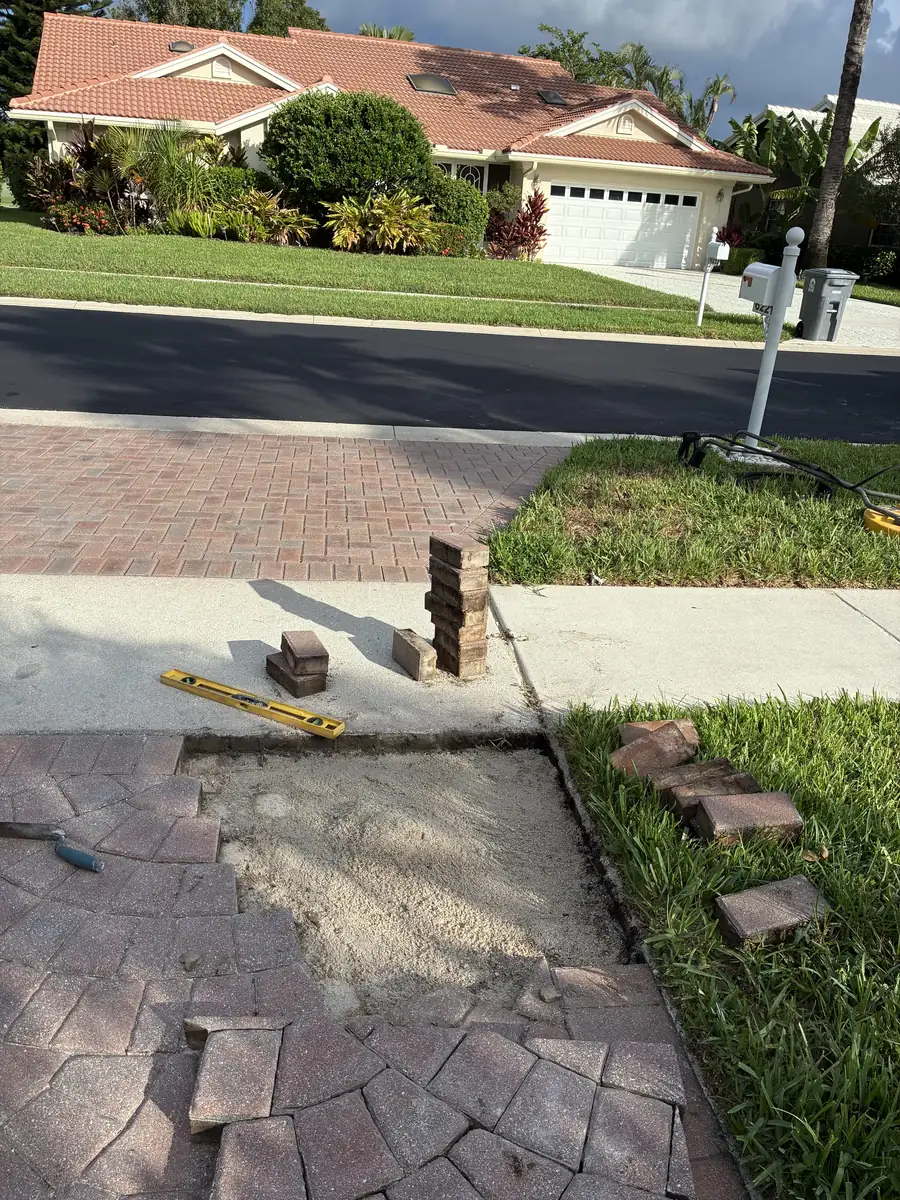
The most useful answer begins with the condition at the property. Materials, age, base, drainage and previous work can change what is practical, so this article is a starting point—not a diagnosis from a photograph.
Settlement is a support problem
Pavers distribute vehicle loads through the bedding and compacted base. When one part of that assembly loses density or material, the finished surface moves downward or sideways. The paver itself may be undamaged even though the course opens, rocks or forms a depression. That is why surface appearance alone cannot define the repair depth.
Water can move fine material
South Florida rainfall can expose an existing weakness where runoff is concentrated. Water entering at an open edge, failed drain connection or repeated downspout discharge can carry fine material away. A clogged drain may hold water in the area, while a low outlet may send flow back beneath the field. The source and exit path should be considered together.
Compaction and previous excavation matter
A utility trench, irrigation repair or driveway extension may settle differently from the original installation if backfill was not compacted in appropriate layers. Settlement can also follow incomplete original preparation. The visible line of movement sometimes tracks the disturbed area below, but lifting pavers is usually required to confirm it.
Edges, roots and vehicle loads
A border without reliable restraint can spread toward a landscape bed or roadway and allow adjacent courses to loosen. Roots may lift one area and create a low spot beside it. Repeated turning or braking concentrates force near aprons and garage approaches. These conditions can overlap, which is why naming only one cause from a photograph is risky.
Use the diagnosis to size the repair
Localized support loss can often be corrected with a focused lift, base repair and reset. Settlement across several unrelated areas, incorrect overall grades or deteriorated materials may require a broader plan. A useful estimate connects the proposed repair limits to observable evidence and explains what could change once the area is opened.
What to notice before requesting an estimate
Take one wide photograph that shows the affected area in relation to the house, driveway, pool or landscape. Add close views of movement, joints, cracks or staining, plus any nearby drain, downspout or edge. Note whether the condition changes after rain and whether it has spread over time.
A clear scope should explain what is visible, what may be contributing, which area will be opened or rebuilt and what result is realistic. If an underlying condition cannot be confirmed until pavers are lifted, that uncertainty should be stated rather than hidden.