
The most useful answer begins with the condition at the property. Materials, age, base, drainage and previous work can change what is practical, so this article is a starting point—not a diagnosis from a photograph.
Edges complete the interlocking system
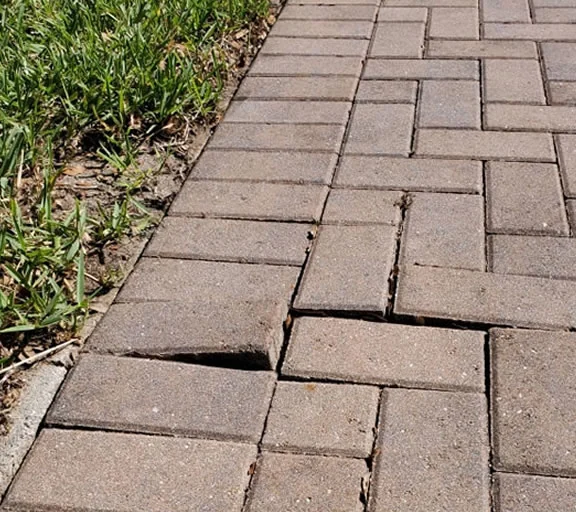
A paver field relies on its perimeter to resist outward movement. If restraint is missing, damaged or no longer supported, traffic and ordinary expansion can push border courses toward a landscape bed, roadway or eroded shoulder.
Water and access can weaken the perimeter
Runoff may remove material beside an exposed edge. Vehicle tires can load a driveway border repeatedly, and landscape work may disturb support. Roots and settlement can also change the edge elevation even when the interior field remains stable.
A proper repair extends into stable paving
Loose edge units are lifted so failed support can be removed. The edge and base are rebuilt to the required line and grade, and enough adjacent pavers are reset to close the pattern cleanly. The chosen restraint should fit the site and adjoining material.
What to notice before requesting an estimate
Take one wide photograph that shows the affected area in relation to the house, driveway, pool or landscape. Add close views of movement, joints, cracks or staining, plus any nearby drain, downspout or edge. Note whether the condition changes after rain and whether it has spread over time.
A clear scope should explain what is visible, what may be contributing, which area will be opened or rebuilt and what result is realistic. If an underlying condition cannot be confirmed until pavers are lifted, that uncertainty should be stated rather than hidden.